


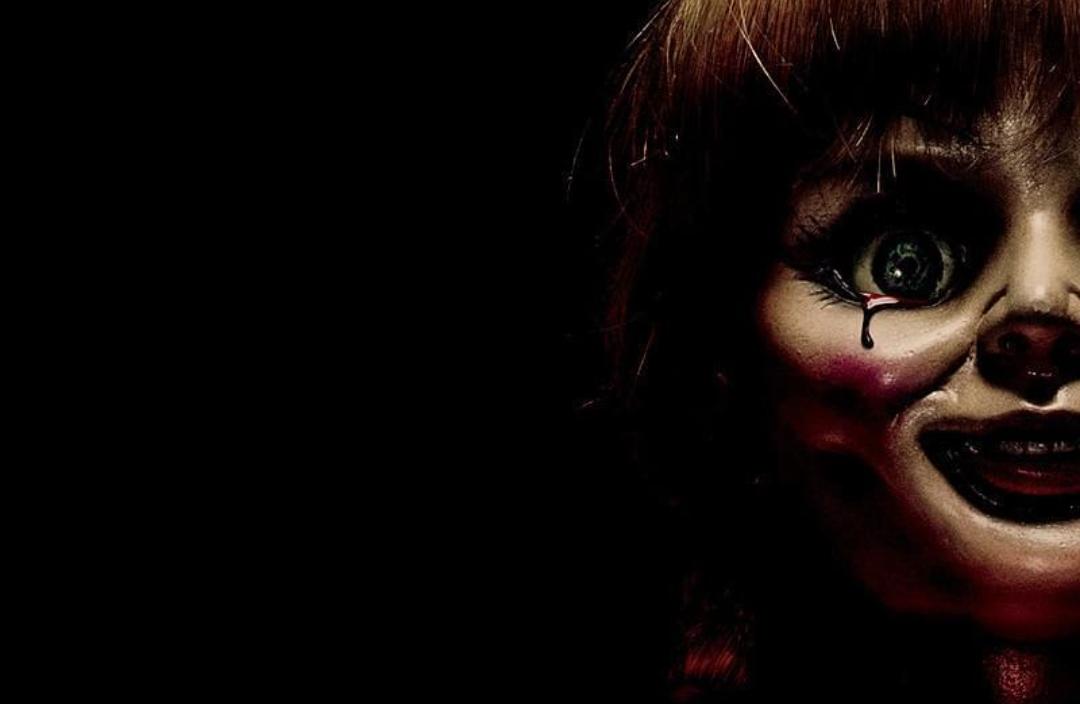
James Wan’s Annabelle (2014), directed by John R. Leonetti, serves as a prequel spin-off to The Conjuring and explores the terrifying origins of the infamous possessed doll. This Review of Annabelle takes a closer look at how the film builds its horror atmosphere, character tension, and supernatural mythology within the expanding Conjuring universe.
While it may not reach the same critical acclaim as The Conjuring, a fair Review of Annabelle acknowledges that the film still delivers moments of genuine suspense and eerie imagery that horror fans appreciate.
At the center of this Review of Annabelle is the story of John and Mia Form, a young couple expecting their first child. Their peaceful life is shattered after a violent home invasion leads to a series of disturbing supernatural events tied to a mysterious vintage doll named Annabelle.
The doll becomes a conduit for an evil entity that slowly begins tormenting Mia and everyone around her. This Review of Annabelle highlights how the film builds its horror around isolation, vulnerability, and psychological fear rather than constant action.
As the story progresses, Mia realizes that the doll is not just an object but a gateway for a dark force seeking to possess her unborn child.
A key element in any Review of Annabelle is the film’s strong atmospheric horror. Director John R. Leonetti uses dim lighting, shadow-heavy frames, and tight indoor spaces to create a constant sense of unease.
Unlike fast-paced modern horror films, Annabelle relies on slow-building tension. This Review of Annabelle emphasizes that the movie’s strength lies in anticipation rather than shock value.
The apartment setting plays a major role in amplifying fear. The confined space makes every noise, shadow, and movement feel threatening, reinforcing the idea that danger can come from anywhere.
A balanced Review of Annabelle should highlight the performances of the main cast. Annabelle Wallis delivers a convincing portrayal of Mia, capturing both emotional vulnerability and growing fear as supernatural events escalate.
Ward Horton, playing John Form, provides stability and emotional support, though his role is somewhat limited compared to Mia’s central arc.
Alfre Woodard, as a concerned neighbor, adds emotional depth and serves as a voice of spiritual guidance, helping Mia understand the nature of the evil she is facing. This Review of Annabelle notes that while the performances are solid, character development could have been stronger.
One of the most important aspects of this Review of Annabelle is its use of traditional horror techniques. The film relies on jump scares, unsettling silence, and visual disturbances to create fear.
The doll itself is not overly animated but becomes frightening through implication rather than constant movement. Shadows, reflections, and unexplained sounds are used effectively to build tension.
This Review of Annabelle also recognizes that while some scares are predictable, others are well-timed and genuinely unsettling, especially in the film’s first half.
A significant point in any Review of Annabelle is its connection to the broader Conjuring universe. The film expands on the mythology of demonic possession and cursed objects introduced in The Conjuring.
Although the Warrens appear only briefly, their presence ties the story into a larger supernatural framework. This Review of Annabelle notes that the film benefits from this connection, even if it does not fully explore the deeper lore.
A proper Review of Annabelle must acknowledge the film’s technical strengths. The cinematography uses muted colors and soft lighting to maintain a vintage, unsettling tone.
Camera movements are often slow and deliberate, forcing the audience to scan the frame for hidden threats. This technique enhances psychological tension.
The sound design is equally important. Subtle creaks, distant crying, and eerie silence create an atmosphere of constant dread. This Review of Annabelle highlights how sound is used more effectively than visual effects in many scenes.
A deeper Review of Annabelle reveals underlying themes of motherhood, fear, and spiritual warfare. Mia’s pregnancy adds emotional stakes to the story, making her vulnerability central to the horror.
The doll symbolizes corrupted innocence, turning a childlike object into a vessel of evil. This contrast is a recurring idea throughout the film.
This Review of Annabelle also notes that faith and belief play important roles in overcoming supernatural forces, aligning with themes seen across The Conjuring universe.
A fair Review of Annabelle should acknowledge its weaknesses. The film relies heavily on jump scares, some of which feel predictable or overused. Compared to The Conjuring, it lacks emotional depth and narrative complexity.
Certain supporting characters are underdeveloped, and the story occasionally follows familiar horror tropes without significant innovation.
However, despite these flaws, the film still manages to deliver a consistently eerie experience.
Final Verdict
This Review of Annabelle concludes that while the film is not as strong as its predecessor The Conjuring, it remains a solid supernatural horror entry with effective atmosphere and chilling moments.
Annabelle succeeds more as a mood-driven horror film than a narrative-heavy one, relying on tension and visual storytelling rather than complex plot twists.
This is a Personal review of my own.
-
What Works
Annabelle
Creepy atmosphere and visuals
Effective jump scares
Strong connection to The Conjuring universe
Terrifying doll design
Suspenseful horror moments
Rating: 3.8/5 ⭐⭐⭐⭐⭐