


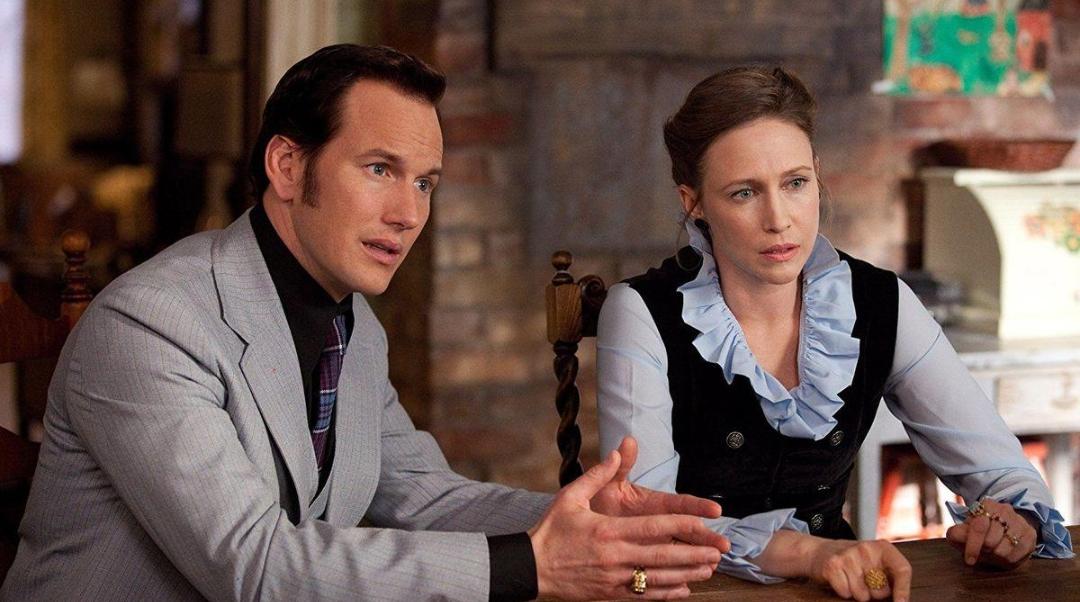
James Wan’s The Conjuring (2013) is widely regarded as one of the most effective supernatural horror films of the modern era. This Review of The Conjuring explores why the film remains so impactful even years after its release. Based on the real-life paranormal investigations of Ed and Lorraine Warren, the movie blends fact and fiction to create a deeply unsettling cinematic experience.
A proper Review of The Conjuring must highlight how the film revived traditional haunted house horror at a time when the genre was dominated by excessive gore and jump-scare-heavy storytelling.
At the heart of this Review of The Conjuring is the Perron family’s terrifying experience in their Rhode Island farmhouse. When Roger and Carolyn Perron move into their new home with their five daughters, they soon begin to experience strange and increasingly violent supernatural occurrences.
What makes the story so effective is its slow-burn structure. The film takes its time building tension, allowing the audience to become emotionally invested in the family before the horror escalates. This Review of The Conjuring emphasizes how this gradual buildup makes every scare feel earned rather than forced.
The Warrens, played by Patrick Wilson and Vera Farmiga, are introduced as experienced paranormal investigators who gradually uncover the dark history behind the house.
A key element in any Review of The Conjuring is the outstanding performances that elevate the material. Vera Farmiga delivers a deeply emotional performance as Lorraine Warren, portraying both strength and vulnerability as she experiences terrifying psychic visions.
Patrick Wilson’s portrayal of Ed Warren provides grounding and warmth. His character balances scientific curiosity with emotional compassion, making the duo feel believable and relatable.
The Perron family, especially Lili Taylor as Carolyn, delivers convincing performances that make the supernatural events feel even more real and distressing. This Review of The Conjuring highlights how the cast’s authenticity is crucial to the film’s success.
No Review of The Conjuring would be complete without praising James Wan’s direction. Known for his mastery of horror storytelling, Wan avoids overusing cheap jump scares and instead focuses on atmosphere, timing, and emotional tension.
The film’s scares are carefully constructed, often relying on silence, camera movement, and anticipation rather than excessive visual effects. This Review of The Conjuring notes that the horror feels grounded and immersive because it is rooted in character-driven storytelling.
Wan’s use of long tracking shots and minimal cuts enhances the feeling that something could happen at any moment, keeping audiences constantly on edge.
A detailed Review of The Conjuring must acknowledge the film’s strong visual style. The cinematography uses dim lighting, warm tones, and shadow-heavy framing to create a sense of constant unease.
The farmhouse itself becomes a character in the story, with each room holding its own secrets and dangers. This Review of The Conjuring emphasizes how the setting plays a crucial role in building suspense.
The sound design is equally important. Subtle creaks, whispers, and distant noises heighten tension, while silence is often used to create fear before sudden scares.
One of the most compelling aspects highlighted in any Review of The Conjuring is that the film is inspired by real events. While certain details are dramatized, the connection to the Warrens’ actual cases adds a layer of authenticity that intensifies the fear factor.
Knowing that the story is loosely based on real paranormal investigations makes the experience more unsettling for many viewers.
A thoughtful Review of The Conjuring should also explore the film’s deeper themes. At its core, the story is about family strength, protection, and belief in the face of fear.
The Warrens’ relationship highlights emotional support and trust, while the Perron family’s struggle represents the breakdown of safety within the home. The film suggests that love and unity are powerful defenses against darkness.
This Review of The Conjuring also notes that the film avoids overexplaining its supernatural elements, which helps preserve mystery and fear.
One of the strongest points in any Review of The Conjuring is its effectiveness as a horror film. Unlike many modern horror movies that rely heavily on CGI or excessive violence, The Conjuring uses simplicity to its advantage.
The “clap game” scene, possession sequences, and hidden entity moments are all carefully timed to maximize psychological fear. The horror feels personal rather than abstract, which makes it more disturbing.
A balanced Review of The Conjuring should mention that some viewers may find the story familiar, as haunted house tropes have been used many times before. Additionally, certain supernatural elements are not deeply explained.
However, the strength of execution outweighs these minor shortcomings.
Final Verdict
This Review of The Conjuring concludes that the film is one of the most successful and well-crafted horror movies of the 21st century. It combines strong performances, expert direction, and atmospheric storytelling to create a genuinely frightening experience.
The Conjuring proves that effective horror does not need excessive gore or complex mythology—just strong storytelling and masterful execution.
This is a Personal review of my own.
-
What Works
The Conjuring
Terrifying atmosphere and suspense
Strong performances
Excellent direction and cinematography
Memorable horror sequences
Emotionally engaging story
Rating:4.5/5 ⭐⭐⭐⭐⭐